
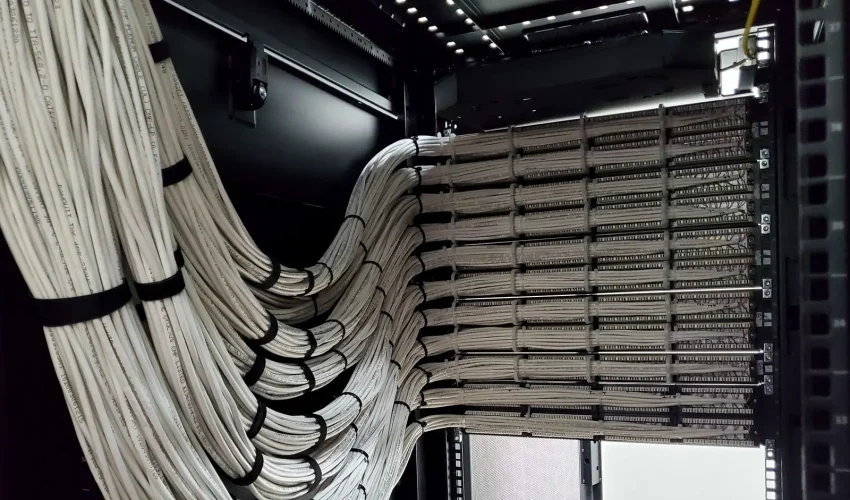
Open the specifications for almost any commercial building and you will find two thick sections toward the end: Division 27 and Division 28. Division 27 is Communications. Division 28 is Electronic Safety and Security. Together they hold nearly every low-voltage system in the building, and most projects need both.
The split looks simple until you have to price a job. A security camera is a Division 28 device, but the cable feeding it may be specified in Division 27, the switch powering it could sit in either division, and the circuit behind that switch belongs to Division 26. This guide to Division 27 vs Division 28 explains how CSI MasterFormat organizes low-voltage work, what each division covers section by section, how the numbers changed over the years, and where scope gaps usually hide.
Division 27 vs Division 28: the short answer
Division 27 moves information. Division 28 protects people and property. If a system carries voice, data, audio or video around a building, it belongs in Division 27. If it decides who gets in, watches the building, detects an intruder or detects a fire, it belongs in Division 28.
Scroll sideways to see the whole diagram.
Divisions 25 and 26 come up on almost every low-voltage job as well, so here are all four side by side:
| Division | Title | Typical scope | Usually installed by |
|---|---|---|---|
| 27 | Communications | Backbone and horizontal cabling, fibre, telecom rooms, racks, pathways, telecom grounding, network equipment, Wi-Fi, voice, audio-video, paging, intercom, nurse call | Structured cabling or communications contractor |
| 28 | Electronic Safety and Security | Access control, video surveillance, intrusion detection, alarm monitoring, fire detection and alarm, leak detection, mass notification | Security integrator, with fire alarm usually its own subcontract |
| 26 | Electrical | Power distribution, panels, branch circuits, lighting, grounding of the electrical system, and often the conduit and boxes for low-voltage work | Licensed electrical contractor |
| 25 | Integrated Automation | Networks and controls that let building systems share data and work together | Controls contractor or systems integrator |
What CSI MasterFormat is
MasterFormat is the numbering system designers use to organize the specifications for commercial and institutional buildings in the United States and Canada. It is published jointly by the Construction Specifications Institute (CSI) and Construction Specifications Canada (CSC). Every type of product and work gets a number and a title, so a door closer, a fibre patch panel and a fire alarm horn always land in the same place, whichever firm wrote the specs.
The numbers are grouped into divisions, and the divisions into subgroups. Divisions 21 to 28 hold the systems that make a building work: fire suppression, plumbing, HVAC, automation, electrical, communications and security. They belong to the Facility Services Subgroup, which keeps a few numbers, such as 24 and 29, in reserve.
Scroll sideways to see the whole diagram.
In Canada, the National Master Specification (NMS), published by the National Research Council, follows the same MasterFormat structure. National Defence and Defence Construction Canada both have policies of using it on their projects. A Division 27 section means the same thing on a hospital in Ottawa as on an office tower in Chicago.
How to read a MasterFormat section number
Each number has six digits in three pairs. The first pair is the division. Every digit after that narrows the subject, so you can tell how broad a section is just by how many zeros it ends with.
- Level 2 numbers end in 0 00 and name a broad family, such as 27 10 00 Structured Cabling.
- Level 3 numbers change the second digit of the middle pair, such as 27 15 00 for horizontal cabling.
- Level 4 numbers change the last pair, such as 27 15 13 for copper horizontal cabling.
- Some offices add a decimal suffix for a fifth level when they need a finer split.
Learn a few repeating pairs and you can find your way around any facility services division. The same slot means the same thing in Divisions 25, 26, 27 and 28:
| Pair | Meaning | Division 27 example | Division 28 example |
|---|---|---|---|
| xx 01 00 | Operation and maintenance | 27 01 00 | 28 01 00 |
| xx 05 00 | Common work results: requirements shared by the whole division, such as grounding, pathways and labelling | 27 05 26 Grounding and Bonding for Communications Systems | 28 05 07 Power Sources for Electronic Safety and Security |
| xx 06 00 | Schedules | 27 06 00 | 28 06 00 |
| xx 08 00 | Commissioning | 27 08 00 Commissioning of Communications | 28 08 00 Commissioning of Electronic Safety and Security |
Why low-voltage work has two divisions
For about forty years MasterFormat had only 16 divisions. Communications cabling was specified inside Division 16 Electrical. Security systems such as access control and video surveillance sat in Division 13 Special Construction, where the 1995 edition gave them a single section. Some consultants even used an unofficial Division 17 for communications because Division 16 had become so crowded.
The 2004 edition replaced the 16 divisions with 50. The old Division 16 was broken into four: 25 Integrated Automation, 26 Electrical, 27 Communications and 28 Electronic Safety and Security. Communications and security had room of their own for the first time, and they could be bid separately from the electrical package.
Scroll sideways to see the whole diagram.
Division 28 then barely changed for a decade, while the security industry moved to IP cameras, networked access control and cloud video. A security industry working group led the rewrite that appeared in MasterFormat 2016. It rebuilt Division 28 around access control, video surveillance, security detection and monitoring, life safety and specialized systems, and it moved the cabling for those systems into Division 27. MasterFormat 2020 followed with a major update to the fire detection and alarm sections.
The newest edition, MasterFormat 2026, adds 2,185 new listings and reorganizes 617 more. CSI lists Division 27 among the divisions that stayed largely stable, while Division 28 saw noticeable expansion driven by digital infrastructure and security systems. Division 27 numbers you learned years ago still hold. Division 28 numbers need checking against the edition your project manual uses.
Here is how the two divisions are laid out today, one Level 2 group at a time:
Scroll sideways to see the whole diagram.
Division 27 Communications, section by section
Division 27 covers every system that moves voice, data, audio or video. Its core is structured cabling: the backbone between telecom rooms, the horizontal cable from each room to each outlet, and the racks, patch panels and pathways that hold it all together. If you are planning one of these rooms, our guide to MDF and IDF network closets covers the layout side.
| Group | What it covers | Sections you will often see |
|---|---|---|
| 27 05 00 Common Work Results | Rules shared by every communications system: grounding and bonding, pathways, labelling | 27 05 26 Grounding and Bonding; 27 05 28 Pathways; 27 05 53 Identification |
| 27 08 00 Commissioning | Testing, documentation and acceptance of communications systems | Certification test reports, as-built records |
| 27 10 00 Structured Cabling | Telecom room fittings, racks, backbone and horizontal cabling, patch cords | 27 11 16 Cabinets, Racks, Frames and Enclosures; 27 13 00 Backbone Cabling; 27 15 00 Horizontal Cabling; 27 16 19 Patch Cords |
| 27 20 00 Data Communications | Switches, routers, wireless access points and other network hardware | 27 21 33 Wireless Access Points |
| 27 30 00 Voice Communications | Telephones, voice messaging and call management | Desk phones, VoIP systems |
| 27 40 00 Audio-Video Communications | Meeting rooms, displays, video conferencing, signage | 27 41 00 Audio-Video Systems |
| 27 50 00 Distributed Communications and Monitoring | Building-wide paging, intercom, nurse call and similar systems | 27 51 16 Public Address; 27 51 23 Intercom; 27 52 23 Nurse Call |
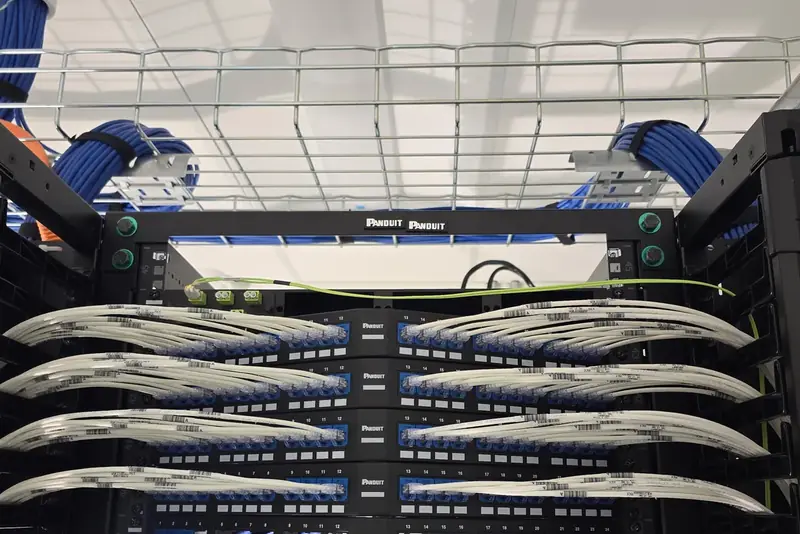
In practice a Division 27 package on a GTA office or warehouse job usually means structured cabling, a fibre backbone between telecom rooms, racks and cabinets, cable tray and Wi-Fi access points. Larger specs add voice systems, meeting room AV and paging.
The standards behind a Division 27 spec
Most Division 27 sections point to the same family of telecommunications standards. Knowing which standard sits behind which section makes the spec much easier to read.
| Section | Standard it usually cites | What the standard sets |
|---|---|---|
| 27 10 00 Structured Cabling | ANSI/TIA-568 | Cable categories, channel lengths, connecting hardware and field testing |
| 27 05 28 Pathways | ANSI/TIA-569 | Telecom rooms, conduit sizing and bends, cable tray, spaces and clearances |
| 27 05 53 Identification | ANSI/TIA-606 | Labels and records for cables, panels, outlets and pathways |
| 27 05 26 Grounding and Bonding | ANSI/TIA-607 | Telecom busbars, bonding conductors and the connection to the building ground |
Many owners ask for Division 27 to be written or reviewed by a BICSI Registered Communications Distribution Designer (RCDD). On Canadian jobs the installation must also meet the Canadian Electrical Code, and cables need the right flame rating for the space they pass through. Our Cat6A cabling page explains the FT4 and FT6 ratings that Canadian specs call for.
Division 28 Electronic Safety and Security, section by section
Division 28 covers the electronic, networked side of security and life safety. Since the 2016 rewrite it is organized into five groups, plus a common work results group shared by all of them.
| Group | What it covers | Sections you will often see |
|---|---|---|
| 28 05 00 Common Work Results | Power supplies, servers and storage, network equipment dedicated to security, integration and cybersecurity requirements | 28 05 07 Power Sources; 28 05 31 Communications Equipment for Electronic Safety and Security |
| 28 10 00 Access Control | Access control software, controllers, readers, credentials and interfaces to door hardware | 28 16 00 Access Control Interfaces |
| 28 20 00 Video Surveillance | Cameras, video management, recording and analytics | 28 21 00 Surveillance Cameras; 28 21 13 IP Cameras; 28 23 00 Video Management System |
| 28 30 00 Security Detection, Alarm and Monitoring | Intrusion detection, alarm monitoring, security operations, asset and personnel tracking | 28 31 00 Intrusion Detection |
| 28 40 00 Life Safety | Fire detection and alarm, gas and water leak detection, mass notification, personal protection | 28 42 00 Gas Detection; 28 46 00 Fire Detection and Alarm |
| 28 50 00 Specialized Systems | Security information management and display, detention systems | 28 51 00 Information Management and Presentation; 28 52 00 Detention Security Systems |
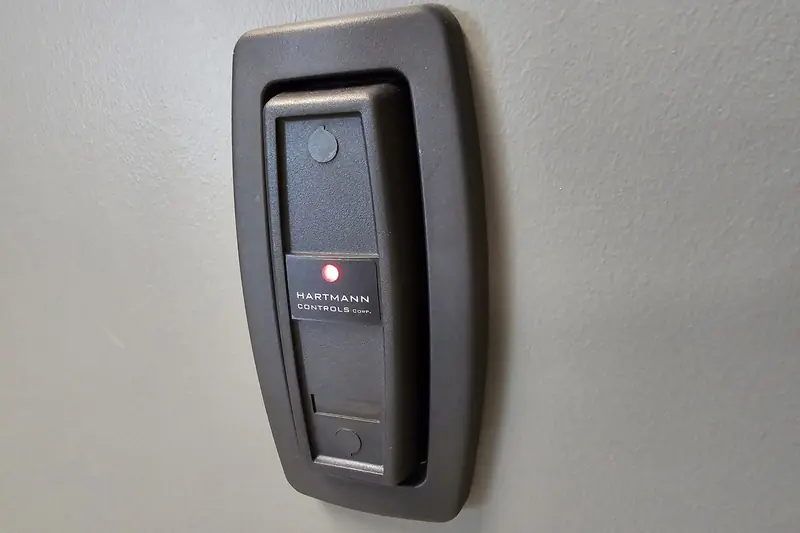
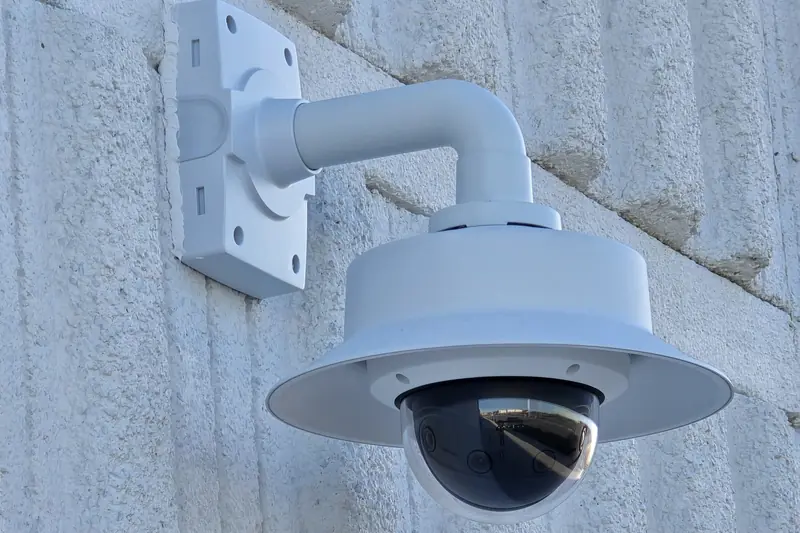
Two details in the 2016 structure catch people out. Switches, servers and power supplies used only by security systems now have their own homes in 28 05 00, so a camera network can be specified in Division 28 even though it looks like Division 27 work. The cable for those systems went the other way, into Division 27. More on that below.
On Cablify jobs, Division 28 work usually means access control, security cameras and video intercom and building entry.
Door hardware: Division 08 or Division 28?
Access control lives in Division 28, but the door it controls belongs to Division 08 Openings. Locks, electric strikes, exit devices and closers are specified in 08 71 00 Door Hardware, and stand-alone access hardware that is not tied into a system, such as a keypad lock, sits in 08 74 00. Division 28 covers the controller, reader, software and the interfaces between them and the hardware.
The handoff matters because the two packages are often tendered at different times. Door hardware is commonly bid early with the doors and frames, while Division 28 usually comes out with the electrical package. If the electrified lock, the request-to-exit device and the door position switch are not coordinated across both, the hardware that arrives on site may not suit the access control system. Our commercial door hardware guide covers the hardware choices in detail.
Fire alarm sits in Division 28, not Division 26
Fire detection and alarm has had its home in Division 28 since the 2004 edition. In the 2016 and later structure it is 28 46 00, under Life Safety. Older project manuals use 28 31 00. In Canada, fire alarm systems are installed to CAN/ULC-S524 and verified to CAN/ULC-S537, and their wiring falls under Section 32 of the Canadian Electrical Code. Fire alarm is usually a separate subcontract even when the rest of Division 28 goes to a security integrator.
Where fire alarm and access control meet, at doors that must release on alarm, both sections should state who supplies the relay and who wires it. Our Ontario Fire Code checklist for access control walks through the code side.
Old and new Division 28 numbers: the same code can mean two things
Many owners, universities and hospitals still keep design standards written to the 2004 to 2014 structure. Read one of those next to a spec written to 2016 or later and some numbers collide.
| System | 2004 to 2014 editions | 2016 and later |
|---|---|---|
| Access control | 28 13 00 Access Control, under 28 10 00 Electronic Access Control and Intrusion Detection | 28 10 00 Access Control |
| Intrusion detection | 28 16 00 Intrusion Detection | 28 31 00 Intrusion Detection, under 28 30 00 |
| Video surveillance | 28 23 00 Video Surveillance, under 28 20 00 Electronic Surveillance | 28 20 00 Video Surveillance, with 28 23 00 now Video Management System |
| Fire alarm | 28 31 00 Fire Detection and Alarm, under 28 30 00 Electronic Detection and Alarm | 28 46 00 Fire Detection and Alarm, under 28 40 00 Life Safety |
| Security cabling | 28 05 13 Conductors and Cables for Electronic Safety and Security | Division 27, 27 15 01 Communications Horizontal Cabling Applications |
Who owns the cable? The overlap behind most disputes
Since MasterFormat 2016, the conductors and cables for security systems, along with their conduit, back boxes, tray and raceway, are classified in Division 27 under 27 15 01 Communications Horizontal Cabling Applications. The devices stay in Division 28. The logic is practical. A Cat6 run to a camera is pulled, terminated, tested and labelled exactly like a Cat6 run to a desk, so it makes sense to specify it in the same place.
The result is that a single IP camera can touch three divisions, and a single access-controlled door can touch four.
Scroll sideways to see the whole diagram.
Not every spec follows this. Plenty of consultants still put camera and access control cable in their Division 28 sections, and some put all pathways in Division 26. MasterFormat only tells the writer where to file a requirement. Who supplies and installs it is set by the drawings, the specifications and the scope of work letter, so read all three before you price.
If you are planning the network side of a camera system, our guide to PoE, PoE+ and PoE++ explains how much power each class of switch port can deliver.
Where Division 26 and Division 25 fit
Division 26 Electrical is the power side: services, panels, branch circuits, lighting and the grounding of the electrical system. It shows up on every low-voltage job anyway, because racks, door power supplies, camera switches and AV equipment all need circuits.
Division 26 often carries the rough-in for low-voltage systems as well: conduit, back boxes, sleeves and plywood backboards. Other projects put that work in 27 05 28 Pathways. Either approach works, as long as the two divisions do not both assume the other one has it. When power and data share a route, the separation and fill rules in our guide to data and electrical conduit under the Canadian Electrical Code apply.
Who can do the Division 26 work in Ontario
In Ontario, electrical work done for others must be performed by an ECRA/ESA Licensed Electrical Contractor. On Cablify projects, Division 26 scope is performed by a Licensed Electrical Contractor and coordinated with our cabling, so the circuits, the rough-in and the low-voltage work land on one schedule. Our electrical services page explains how that works, and electrical installation for IT systems covers the circuits that telecom rooms usually need.
Division 25 Integrated Automation
Division 25 is the integration layer. It covers the networks and controls that let building systems share data, with dedicated sections for controlling communications systems (25 57 00) and electronic safety and security systems (25 58 00). On many projects the building automation system is still specified with the HVAC controls in Division 23, so Division 25 may be thin or missing. When it is present, it decides who connects access control and video to the building management system.
Scope gaps to check before you price or award
Most change orders on low-voltage jobs come from the seams between Divisions 26, 27 and 28 rather than from inside them. These are the ones worth checking on every job.
1. Rough-in that nobody carries
Division 26 says pathways by others. Division 27 says pathways by the electrical contractor. Go device by device and confirm who supplies each box, conduit stub and pull string.
2. The camera switch
A PoE switch for cameras could sit in 27 20 00, in 28 05 31 or in the owner’s own IT purchase. Decide once and write it into the scope so it is neither missed nor bought twice.
3. Power for door hardware and panels
Lock power supplies are 28 05 07, but the 120 V circuit that feeds them is Division 26. Check that every access panel and power supply location has a circuit on the electrical drawings.
4. Fire alarm release
Doors that unlock on alarm need a relay and wiring from the fire alarm system. Both 28 46 00 and the access control section should name who provides each part.
5. Telecom grounding
The busbars and bonding inside telecom rooms are 27 05 26. The bonding conductor back to the electrical service is usually electrical work. Make sure the two scopes actually meet.
6. Firestopping
Every cable penetration through a rated wall or floor needs a listed firestop system, normally specified in 07 84 00. Confirm whether the cabling contractor or a firestopping subtrade seals the low-voltage penetrations.
7. Owner-furnished equipment
Switches, access points, cameras or phones bought by the owner still need mounting, patching, power and testing. Spell out who installs each item and who configures it.
8. Test reports and labels
27 05 53 and 27 08 00 set the labelling and test documentation. Agree the format of certification reports at the start of the job so they match what the owner expects at closeout.
9. Mixed MasterFormat editions
If the owner standard follows MasterFormat 2014 and the consultant’s spec follows 2016 or later, map every Division 28 number before you rely on it.
Division 27 and 28 on Canadian projects
Because MasterFormat is a joint CSI and CSC standard, Canadian project manuals use the same division numbers as American ones. The differences are in the codes and standards each section cites.
- Electrical code. The Canadian Electrical Code, Part I, adopted in Ontario as the Ontario Electrical Safety Code, takes the place of the US National Electrical Code. Section 60 covers communication circuits, Section 16 covers Class 1 and Class 2 circuits, and Section 32 covers fire alarm systems.
- Cable flame ratings. Canadian FT4 and FT6 ratings appear in place of, or beside, the US riser and plenum markings.
- Fire alarm. Installation to CAN/ULC-S524 and verification to CAN/ULC-S537.
- Master specifications. Federal and many institutional projects start from the National Master Specification, which uses MasterFormat numbering.
- Licensing. In Ontario, Division 26 work needs an ECRA/ESA Licensed Electrical Contractor.
For broader context on how these pieces come together on a project, see our new office network cabling plan and the data cabling in Toronto hub.
Questions
What is Division 27 in construction?
Division 27 Communications is the part of a CSI MasterFormat project manual that covers structured cabling, fibre, telecom rooms and pathways, network equipment, Wi-Fi, voice, audio-video, paging, intercom and nurse call systems.
What is Division 28 in construction?
Division 28 Electronic Safety and Security covers access control, video surveillance, intrusion detection, security monitoring, fire detection and alarm, gas and water leak detection and mass notification.
Is CCTV Division 27 or Division 28?
Cameras, recorders and video management software are Division 28, under 28 20 00 Video Surveillance. Since MasterFormat 2016 the cable to the cameras is classified in Division 27, although many specifications still keep it in Division 28.
Is access control Division 08 or Division 28?
Both. The access control system itself, meaning the controllers, readers, credentials and software, is Division 28. The locks, strikes, exit devices and other door hardware are Division 08, mainly 08 71 00 Door Hardware.
Is fire alarm Division 26 or Division 28?
Division 28. Fire alarm has been part of Division 28, not the electrical division, since MasterFormat moved to 50 divisions in 2004. It is 28 46 00 Fire Detection and Alarm in the 2016 and later structure, and 28 31 00 in older editions.
Is Wi-Fi Division 27?
Yes. Wireless access points are part of Data Communications, section 27 21 33, and the cabling that feeds them is Division 27 structured cabling.
What happened to Division 16 and Division 17?
Division 16 Electrical was split in 2004 into Divisions 25, 26, 27 and 28. Division 17 was never an official MasterFormat division. Some consultants used it informally for communications before 2004 because Division 16 had become so crowded.
Which divisions are the low-voltage divisions?
Divisions 27 and 28 hold most low-voltage systems, and Division 25 covers integrated automation. Division 26 is the electrical division, although it often includes conduit and boxes for low-voltage systems.
Do Canadian projects use Division 27 and Division 28?
Yes. MasterFormat is published jointly by the Construction Specifications Institute and Construction Specifications Canada, and Canada’s National Master Specification follows the same numbering. The codes referenced inside the sections are Canadian, such as the Canadian Electrical Code and CAN/ULC fire alarm standards.
Which MasterFormat edition is current?
MasterFormat 2026. CSI lists Division 27 among the divisions that stayed largely stable in that edition, while Division 28 expanded, so always check which edition your project manual follows before relying on a Division 28 number.
Pricing a Division 27 or Division 28 package in the GTA?
Cablify installs structured cabling, fibre, racks, Wi-Fi, AV, access control, security cameras and video intercom across Toronto and the GTA with our own technicians. Division 26 work on our projects is performed by an ECRA/ESA Licensed Electrical Contractor. Send us the specifications and drawings and we will price to them and point out any gaps between divisions.
Send your specs for a quoteRelated guides
- Data and electrical conduit in CanadaCanadian Electrical Code rules when power and data share a route.
- Electrical servicesCommercial power for comms rooms, equipment and fit-outs.
- Structured cablingBackbone, horizontal cabling, racks and testing.
- Commercial access controlReaders, controllers, credentials and door integration.
- Security camera installationIP cameras, recording and video management.
- Commercial door hardwareElectrified locks, strikes and exit devices for access control.
Sources
- CSI: MasterFormat 2026
- CSI: MasterFormat frequently asked questions
- The Construction Specifier: Remaking Division 28 with MasterFormat 2016
- Consulting-Specifying Engineer: MasterFormat 2004
- Consulting-Specifying Engineer: Addressing security in MasterFormat
- National Research Council Canada: NMS user’s guide
- Electrical Industry News: Canadian Electrical Code Section 32