
Access control for Brampton transport yards, plants and 24 hour operations.
Driver and yard gate entry, dispatch and cross-dock separation, card and fob readers, mobile credentials and controlled areas. Built for buildings that run nights and weekends with nobody on a front desk.
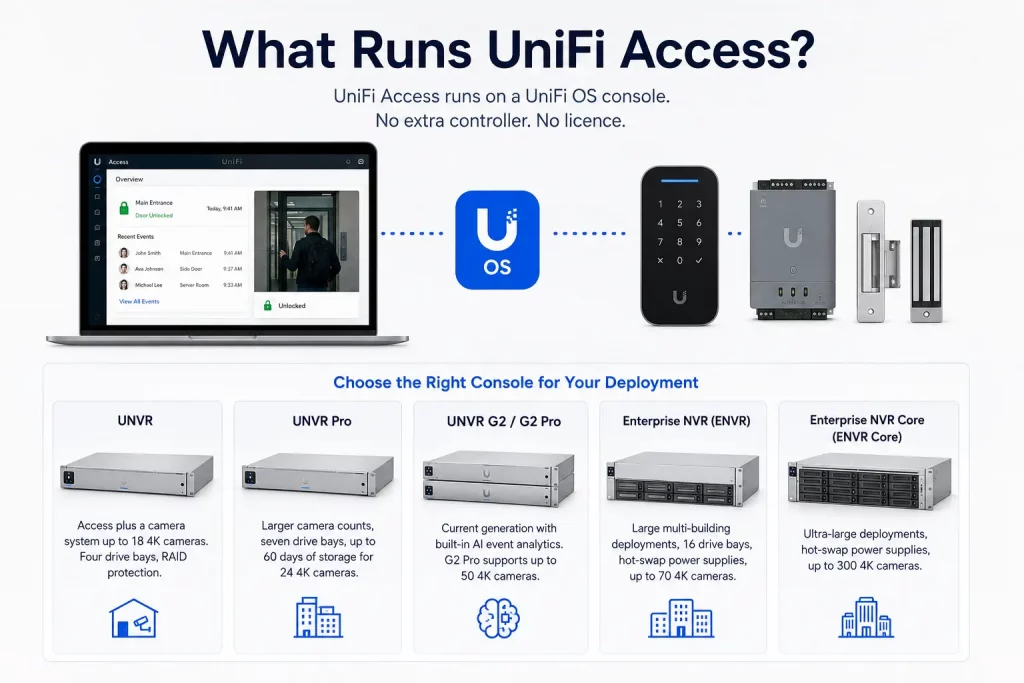
What Brampton looks like from a door survey
Brampton moves freight. The Airport Road, Torbram and Steeles corridors are transport yards, terminals and plants, and most of them are running when the rest of Peel is closed. That single fact changes how access control gets designed here.
Transport yards and terminals
Airport Road, Torbram, Steeles and out toward Highway 50. Drivers coming and going at all hours, a yard gate that should not be manned, and a dispatch office that needs to stay separate from the drivers room.
Cross-dock and freight handling
Doors between dock, staging and the office that need different rules for different shifts. A general dock credential should not open the paperwork.
Plants and regulated manufacturing
Brampton has a real pharmaceutical and regulated manufacturing base. Controlled areas, quarantine and release zones, and a log that stands up when an auditor asks who entered and when.
Downtown Brampton offices
Queen Street and the older stock around city hall. Masonry walls, no easy cable route and a buzzer panel from another era. These need a different approach to a new build.
Bramalea and Heart Lake industrial
Older single tenant and small bay industrial. Usually one overworked front door, an unlocked side door nobody admits to, and keys that have been copied for twenty years.
Retail and service plazas
Bovaird, Queen and the Mount Pleasant and Springdale plazas. Back of house, cash office and after hours cleaner access, which is where most losses actually start.
Drivers, yards and the gate nobody should have to man
This is the Brampton problem. Drivers arrive at two in the morning, the yard gate needs to open for them and for nobody else, and putting a person in a booth around the clock costs more than the whole access control system.
Credentials with a schedule solve most of it. A driver credential opens the gate and the drivers entrance, not the dispatch office and not the dock paperwork. Carrier and owner-operator credentials get an end date so they stop working when the contract does, rather than living in a glovebox for three years.
The gate operator ties into the same system as the doors, so the gate and every door report into one log. When something goes missing off a trailer you have a time and a credential, not a guess.
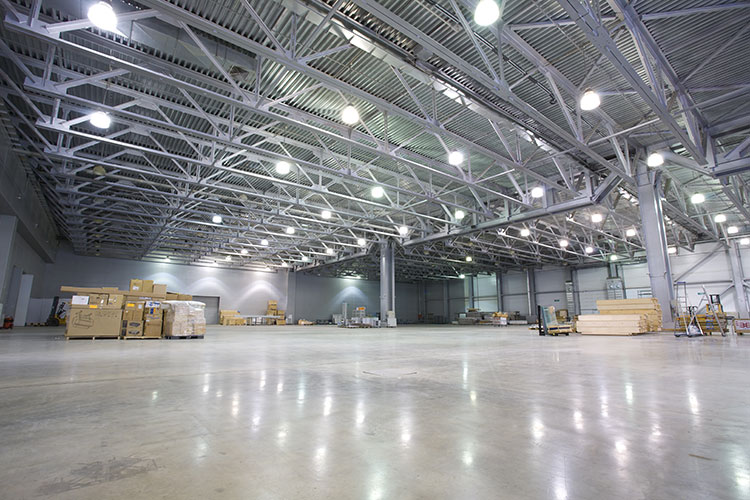
Buildings that run when nobody is at the front desk
A lot of Brampton runs two or three shifts. Access control designed for a nine to five office falls apart here, because the assumptions behind it are wrong.
What actually works: rules that follow the shift rather than the clock on the wall, so a credential that opens a door at 06:00 on a weekday does not open it at 03:00 on a Sunday. Held-open alerts on doors that get propped during a night shift when there is no supervisor walking past. And a real answer to who gets called when a reader fails at midnight, because on a 24 hour site that is not a Monday morning problem.
Cleaners and contractors are the other night time gap. They need a credential with a window on it, not a key that the last cleaning company may or may not have returned.
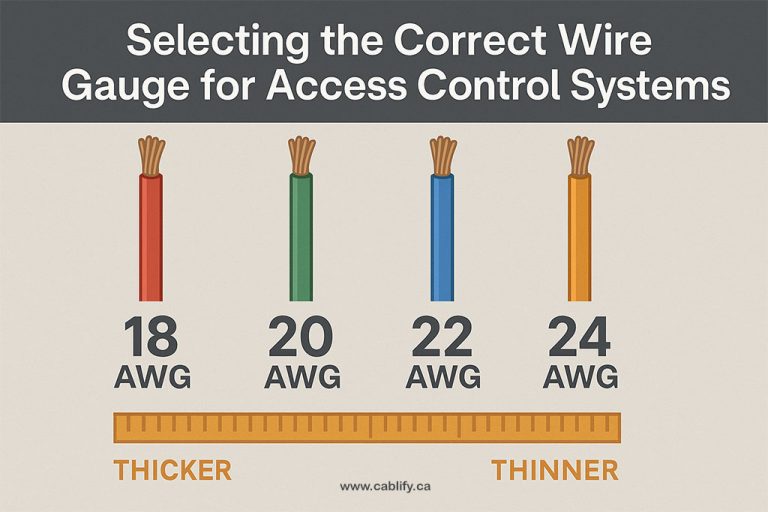
Older Brampton buildings and the no-cable-route problem
Downtown Brampton and the older Bramalea stock have a practical obstacle that newer buildings do not. Solid masonry, no accessible ceiling, finished walls and a door that is twenty metres from anything resembling a cable path.
Running conduit across a heritage frontage is neither cheap nor welcome. The alternative is wireless locks that talk back to a hub, which keeps the credential management identical to a wired door while removing most of the destructive work. They are not right everywhere, they need battery changes, and on a high traffic main entrance a wired reader is still the better answer. On an interior office or a records room in an old building they are often the only sensible option.
We survey for this before quoting, because a wired assumption on an unwireable door is how a fixed price becomes a change order.
What we install in Brampton
The technical detail sits on our main commercial access control page, covering fail-safe versus fail-secure, credential types and cost per door. Locally the usual scope is:
- Yard gate and drivers entrance control on scheduled credentials
- Separation between dock, dispatch, office and drivers room
- Shift based access rules rather than simple day and night
- Held-open and forced-door alerts on unsupervised night shift doors
- Contractor and cleaner credentials with a fixed expiry
- Controlled and restricted area access with a reviewable audit trail
- Wireless locks where an older building has no viable cable route
- Takeover and documentation of a system whose installer is long gone
- Integration with security cameras so a badge event pulls the footage from that door
Permits, fire code and who inspects in Brampton
The low voltage side is generally permit free. What sits around it is not.
- New power. A circuit for a controller or power supply is licensed electrical work under the Electrical Safety Authority, notified and inspected. We do the electrical side in house so it is not a second trade and a second schedule
- Egress doors. Magnetic locks must release on the fire alarm, on power loss and on a button at the door. Brampton Fire and Emergency Services inspects it and their reading is final
- Cutting a fire rated door or frame can attract a building permit from the City of Brampton. We raise it at survey, not on install day
- Dock and plant doors that are also exits get the same egress treatment as a front entrance, which catches people out more often than anything else on this list
Areas we cover around Brampton
Inside Brampton we work across Bramalea, Heart Lake, Springdale, Mount Pleasant, Castlemore, Gore, downtown Queen Street, and the industrial corridors along Airport Road, Torbram, Steeles, Bovaird and Highway 50. Most door surveys get booked within the same week.
Brampton questions we get asked
Can drivers get into the yard without someone manning the gate?
Yes, and that is the most common reason Brampton yards call us. Driver credentials open the gate and the drivers entrance on a schedule, and nothing else. Carrier and owner-operator credentials can carry an end date so they stop working when the contract does instead of staying live in a glovebox.
Can access rules follow our shifts rather than a fixed day and night?
Yes. Rules are set per credential group and per door, so a dock credential can work 06:00 to 18:00 on weekdays and be dead at 03:00 on a Sunday. On multi-shift sites this is usually more valuable than the readers themselves.
Our building has no ceiling access and solid walls. Can it still be done?
Usually, but not always with wired readers. Wireless locks that report back to a hub give you the same credential management without cutting a route through masonry. They need battery changes and we would still wire a busy main entrance, but on interior and records room doors in older Brampton buildings they are often the practical answer.
Can we keep dispatch separate from the dock and the drivers room?
That is the standard setup and it is worth doing properly. A dock credential should not open the paperwork, and a driver credential should not open either. Separating them takes minutes to configure and is the difference between a useful log and a meaningless one.
What happens if a reader fails at two in the morning?
On a 24 hour site that question should be answered before the system goes in, not after. We set the fail state per door deliberately, make sure your people know how to release a door manually, and agree who gets called. A site that runs nights needs a plan that does not depend on a Monday morning.
Do you cover Caledon and Bolton as well?
Yes. We work across Peel and run multi-site jobs where a company has a yard in Brampton and a plant in Caledon or Mississauga on one system with one administrator.
Other services in Brampton
We also handle data cabling in Brampton and electrical work across Brampton and Caledon. For the technical side see our commercial access control systems page, the card reader installation detail, or our guide to choosing a system.
Book a door survey in Brampton
We walk every door and gate on your list, flag the egress doors, and give you an itemized price before anything starts. No charge for the visit. Call 1-647-846-1925.