


Public Address (PA) systems are essential in a variety of settings, ranging from simple setups for small venues to complex configurations for large stadiums and public spaces. These systems enable the amplification of sound so that it can be heard clearly over a wide area, making them indispensable for events, announcements, and emergency communications. This article delves into the intricacies of PA systems, including their components, block diagram, and the essential requirements for an effective system.
Typical applications include:
-
Announcements and paging in offices, schools, and hospitals
-
Background music for restaurants, retail stores, and hotels
-
Emergency alerts and evacuation procedures in public buildings
-
Event sound management in conference halls and stadiums
A well-installed PA system ensures consistent audio coverage, minimal distortion, and clear intelligibility, even in large or noisy environments.
What Is a Public Address (PA) System?
A Public Address System (PA system) is an electronic sound reinforcement and communication system that amplifies audio input — such as voice, recorded music, or video presentation sound — and distributes it through strategically placed loudspeakers.
Typical applications include:
-
Announcements and paging in offices, schools, and hospitals
-
Background music for restaurants, retail stores, and hotels
-
Emergency alerts and evacuation procedures in public buildings
-
Event sound management in conference halls and stadiums
A well-installed PA system ensures consistent audio coverage, minimal distortion, and clear intelligibility, even in large or noisy environments.
Block Diagram of a PA System
The block diagram of a PA system illustrates the flow of signal from the input to the output, highlighting the essential components involved in the process:
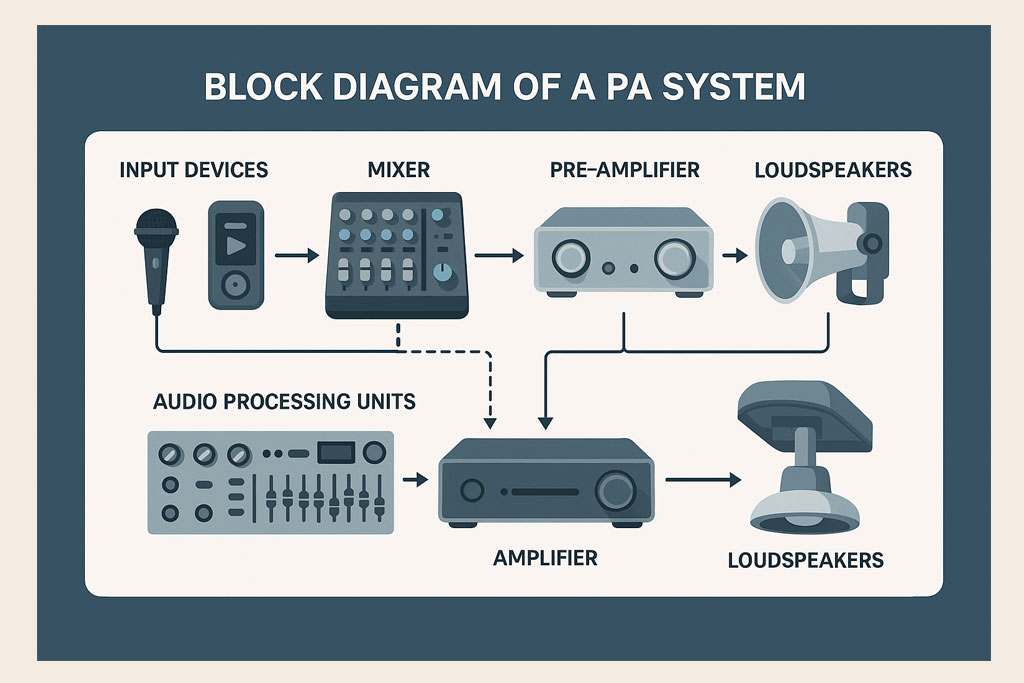
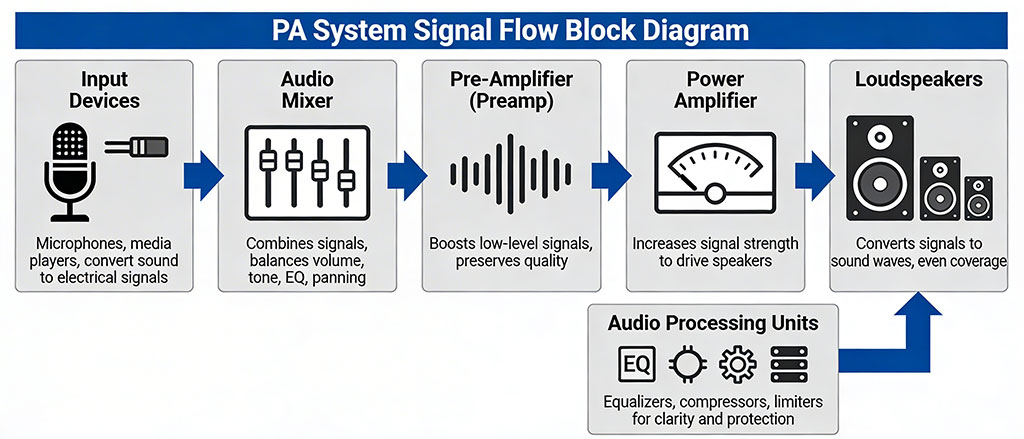
A standard PA system block diagram explains the signal flow from input to output — detailing how sound moves through each stage of amplification and processing.
1. Input Devices
The process begins with microphones or line inputs from media players, computers, or networked audio systems. These devices capture sound and convert it into electrical signals.
2. Audio Mixer
The mixer combines signals from multiple sources, balancing volume, tone, and effects. It offers control over EQ, panning, and sound dynamics for a polished, professional output.
3. Pre-Amplifier (Preamp)
The preamp boosts low-level audio signals to a suitable level for the power amplifier. It preserves audio quality and strengthens weak signals.
4. Power Amplifier
The amplifier increases the signal strength, providing the necessary power to drive loudspeakers or zone speakers throughout the facility.
5. Loudspeakers
Speakers convert electrical signals into audible sound waves. Strategic placement ensures even sound coverage and prevents acoustic dead spots.
6. Audio Processing Units
Devices like equalizers, compressors, and limiters fine-tune the signal for clarity and balance. They help prevent distortion and protect system components.
Components & Requirements of PA System
The efficiency and effectiveness of a Paging System depend on its components and their configuration.
A reliable PA setup includes multiple specialized components, each contributing to overall performance and sound quality.
-
Microphones – Available in dynamic, condenser, lapel, and wireless types depending on application needs.

-
Mixers – Manage multiple input sources and integrate external processors or effects units.
-
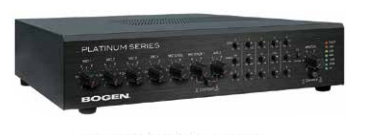
Amplifiers – Should match speaker power requirements for optimal output and minimal distortion.
-
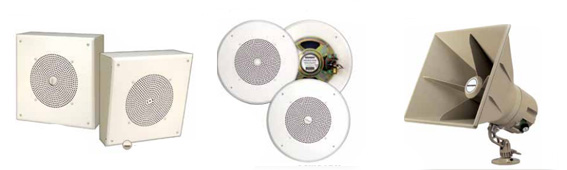
Speakers – Choose between ceiling, wall-mounted, column, or line-array speakers based on room acoustics and coverage.
-
Cables and Connectors – High-quality signal cables reduce interference and maintain signal integrity.
-
Power Supply – Ensure consistent, grounded power input to prevent system noise or damage.
For large systems, zoning controllers and networked amplifiers allow audio to be directed to specific areas independently — ideal for multi-floor buildings, shopping centers, and arenas.
Essential Requirements for an Effective PA System
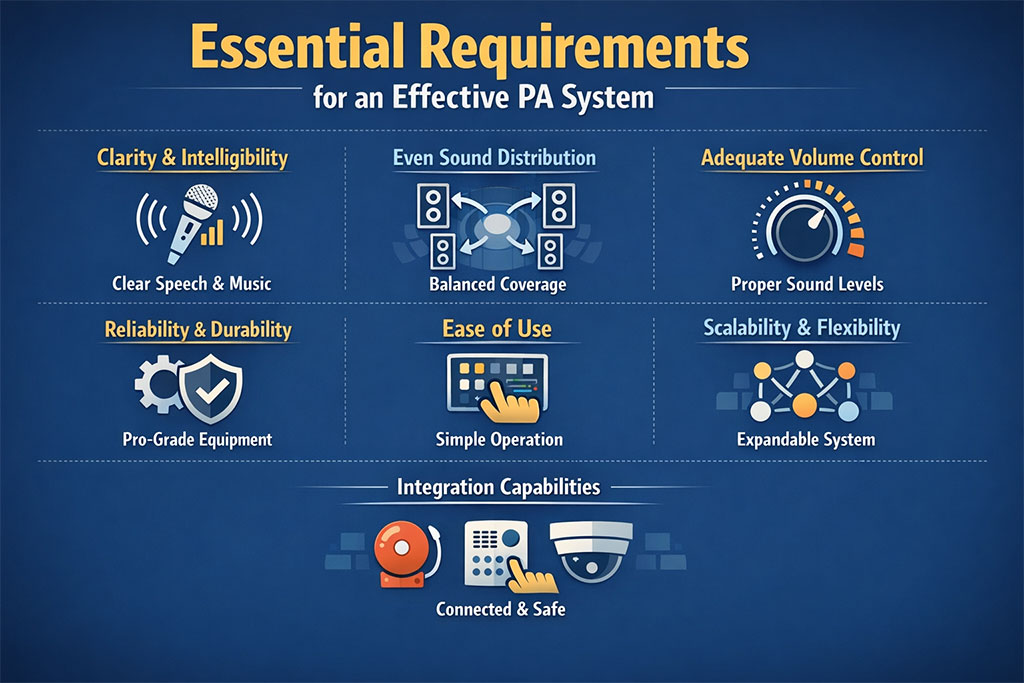 For a PA system to serve its purpose effectively, it must meet several key criteria:
Designing an effective PA system involves balancing several practical and technical factors:
-
Clarity and Intelligibility – Speech and music must be crisp and distortion-free, ensuring announcements are easily understood.
-
Even Sound Distribution – Avoid “hot” or “dead” zones with careful speaker placement and tuning.
-
Adequate Volume Control – Deliver sufficient sound pressure levels to overcome ambient noise without causing discomfort.
-
Reliability and Durability – Use professional-grade equipment designed for continuous operation.
-
Ease of Use – Interfaces should be intuitive for quick adjustments during live operation.
-
Scalability and Flexibility – Systems should support future expansion or integration with AV, CCTV, and access control systems.
-
Integration Capabilities – Link with fire alarm systems, intercoms, and paging systems for centralized management and safety compliance.
By carefully considering these aspects, one can design and implement a PA system that meets the specific needs of any venue or event, ensuring clear communication and enhancing the auditory experience for all involved.