


Designing a CCTV system for a large warehouse is about engineering a reliable, compliant security platform, not just hanging cameras on walls. Done right, your system deters theft, protects staff, supports investigations and stands up to Canadian privacy expectations.

What a warehouse CCTV system must achieve
A clear set of goals is the foundation of any good design.
- Security and loss prevention
- Safety and operations
- Legal and privacy constraints (Canada / Ontario)
- Under PIPEDA and Ontario guidance, video surveillance must be reasonable, necessary and tied to a legitimate purpose like security, safety or loss prevention.
- Employers must inform staff about workplace monitoring and avoid cameras in high‑privacy spaces such as washrooms and change rooms.
- Clear signage at entrances (“Video surveillance in use”) and a written policy are expected best practices.
These inputs form your basic Threat and Risk Assessment (TRA): which assets are at risk, where threats can appear, and whether you need simple detection or full identification in each zone.
Designing a Security Camera Installation system for a large warehouse in Toronto or the GTA is about engineering a reliable, compliant security platform, not just hanging cameras on walls. Done right, your system deters theft, protects staff, supports investigations and stands up to Canadian privacy expectations.
Warehouse CCTV: More Than Just Cameras, It’s a Strategic Tool
A great warehouse CCTV system does more than just record video; it’s a proactive solution built on clear goals. Before we design anything, we focus on what you truly need to protect, improve, and comply with. Here’s what a modern system should achieve for you:
1. Protect Assets & Prevent Loss (Your Bottom Line)
- Stop External Threats: We position cameras to deter and document unauthorized access at your property line, in yards, and at all doors (dock, bay, and personnel entrances).
- Reduce Internal Shrinkage: Monitor high-value inventory zones, returns areas, locked cages, and tool rooms to promote accountability and prevent loss.
2. Enhance Safety & Operations (Your Productivity)
- Promote a Safer Workplace: Cameras in key operational areas—like forklift aisles, loading docks, and pedestrian crossings—provide clear evidence in case of an incident, supporting investigations, safety training, and protecting your company from false claims.
- Improve Workflow: Viewing congestion at docks and staging areas helps identify bottlenecks. This isn’t just surveillance; it’s data to help you improve throughput and efficiency.
3. Ensure Legal Compliance & Respect Privacy (Your Peace of Mind)
In Canada and Ontario, workplace video surveillance must be reasonable and justified. We help you implement a system that works within the law:
- Clear Purpose: Your system should tie directly to legitimate needs like security, safety, or loss prevention.
- Transparency: We advise on best practices, including clear signage at entrances and a written policy, so staff are informed.
- Respectful Boundaries: We help you plan camera placements to avoid high-privacy areas (like washrooms or change rooms), ensuring your monitoring is both effective and respectful.
The Foundation: Your Threat & Risk Assessment (TRA)
All these points come together in a simple, logical plan. We help you define it by answering key questions: What assets are most at risk? Where could threats occur? Does each area need a simple motion alert or a clear identification shot? This process ensures your CCTV system is tailored, cost-effective, and built on a solid foundation.
Let us build a system that watches over your space, your people, and your peace of mind.
Mapping your warehouse and risk zones
Start with a to‑scale floor plan of the warehouse and yard.
- External zones to mark
- Internal zones to map
- Main warehouse floor, pallet racking aisles and cross‑aisles.
- High‑value storage areas: cages, pharma/alcohol/electronics, tool and key rooms.
- Shipping/receiving, returns, rework/repair benches, packing lines and staging lanes.
- Staff entrances, locker corridors, time‑clock areas and common rooms.
For each zone, define the video objective (from RCMP‑style guidance):
- Detection – see that something is happening.
- Observation – see what is happening.
- Recognition / identification – identify a person, plate or item.
This objective will later drive your camera resolution, lens and mounting height.
Choosing the right cameras for a warehouse
Modern warehouse CCTV in Toronto and the GTA is almost always IP‑based with PoE and NVR/VMS back‑ends.
Camera form factors
- Turret / dome cameras
- Bullet cameras
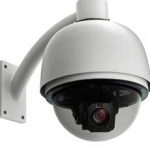
- PTZ cameras
- Multi‑sensor / panoramic cameras
Key technical features
- Resolution
- Low‑light performance
- WDR, weather and vandal ratings
Smart camera placement in and around a warehouse
Poor placement is one of the biggest reasons warehouse CCTV fails when it’s needed most.
Perimeter, yard and parking
- Place cameras on building corners and mid‑wall points with overlapping coverage of fence lines and property edges.
- At vehicle gates and yard entrances, design for license plate capture: appropriate angle, lighting and pixel density.
- Supplement with motion‑activated or scheduled LED lighting to help both deterrence and image quality.
Loading docks and overhead doors
- Cover dock aprons, dock plates, overhead door tracks and the area just inside the door to see who is loading and unloading.
- Use WDR cameras facing toward outdoor areas, or a combination of interior and exterior cameras to deal with high contrast.
Interior aisles and open floor
- Mount cameras at cross‑aisles or end‑of‑aisles, angled down the length of aisles to capture faces and activities, not just the tops of pallets.
- Use corridor mode (vertical field of view) on suitable cameras to maximize detail down long racks with fewer devices.
- Account for future inventory profiles: avoid camera placements that will be completely blocked when racks are full or when seasonal stock arrives.
High‑value rooms and restricted areas
- Place a camera on every access point and at least one inside each high‑value area with enough resolution to identify individuals working with goods.
- For very high‑value items, consider multiple angles to avoid blind spots behind racking, doors or machinery.
Offices and staff spaces
- Position cameras to monitor entrances, corridors and open office areas where staff know and have been told cameras exist.
- Do not place cameras inside washrooms, changing rooms or other spaces where privacy is expected; this is inconsistent with Ontario privacy law and guidance.
Designing the CCTV network and storage backbone
CCTV in a large warehouse is a network and storage project as much as a camera project.
Network architecture (VLANs, PoE and uplinks)
- Put cameras on a dedicated VLAN with tightly controlled routing and firewall rules; only NVR/VMS servers and authorized client stations should see this traffic.
- Use PoE switches as aggregation points in local IDF closets near camera clusters to keep cable runs short and avoid PoE budget issues.
- Use fiber uplinks from remote closets back to the main MDF/server room to handle aggregate bandwidth and avoid copper length limitations.
Bandwidth planning:
- A typical 4 MP camera at 15 fps using H.265 will often consume 2–4 Mbps, depending on the scene and compression.
- Multiply per‑camera bitrate by camera count, add 20–30% safety margin and verify all uplinks and NVR network interfaces can handle this load.
Storage and retention
Most warehouse operators in Canada target 30–90 days of video retention; insurance and risk profiles may drive longer periods.
- Storage is a function of:
Example estimate:
Deployment patterns:
- NVR appliances with integrated storage and PoE for smaller or single‑site warehouses.
- Server‑based VMS with dedicated RAID arrays or SAN for larger deployments or multi‑site operations.
- Cloud or hybrid VMS for GTA logistics providers managing multiple warehouses from a central security operations centre or third‑party monitoring partner.
Structured cabling and power: the often‑ignored foundation
Camera systems are only as reliable as the network cabling and power behind them.
- Use Cat6 or Cat6A for all new camera runs; avoid relying on old mixed Cat5e in distance‑critical or high‑resolution deployments.
- Follow Ethernet standards: keep total copper channel length within 100 m (90 m horizontal + 10 m patching); use fiber and extenders or remote switches for longer runs.
- Respect bend radius, avoid kinks and keep data cables separated from high‑voltage power lines to reduce attenuation and EMI‑induced packet loss.
- Label both ends of every run and maintain accurate rack elevations, patching records and floor plans so cameras can be quickly traced and serviced.
Power considerations:
- Sum camera PoE draws and compare to switch PoE budgets, watching for high‑draw PTZs and multi‑sensor units that may require PoE+ or PoE++ feeds.
- Protect PoE switches, NVR/VMS servers, and core network devices with UPS and surge protection to keep CCTV recording through brief outages and brownouts.
Lighting and image quality in large warehouse environments
Lighting is frequently underestimated and yet is critical for evidence‑grade video.
- Interior lighting
- Mixed lighting at doors
- Exterior lighting
Where lighting upgrades are limited, IR or thermal cameras can still provide detection; be realistic about whether identification is feasible in those zones.
Privacy, policies and Ontario workplace rules
To be truly “enterprise‑grade,” a warehouse CCTV plan in the GTA must align with Canadian privacy and employment law basics.
- Written video surveillance policy
- Employee notification and signage
- Access control and retention
These practices help ensure that when footage is used in criminal investigations or employment disputes—as is often the case with warehouse break‑ins in the GTA—it is defensible and lawfully collected.
Integrating warehouse CCTV with alarms, access and remote monitoring
To get full value from your CCTV system, integrate it with other security layers.
- Intrusion alarm integration
- Access control integration
- Remote video monitoring
- Many Toronto and GTA warehouses leverage remote monitoring services or cloud VMS to provide virtual guarding, alarm verification and remote tours, reducing on‑site guard costs.
- Ensure your upstream bandwidth and security architecture support encrypted remote access and do not expose the CCTV network directly to the internet.
Practical design workflow you can apply in Toronto & the GTA
Use this as a repeatable checklist for new builds or major upgrades.
- Threat and risk assessment
- Floor plan and camera layout
- Network & storage planning
- Legal/policy review for Ontario
- Bill of materials and standards
- Installation, commissioning and training
- Maintenance and periodic review
A CCTV system for a large warehouse in Toronto and the GTA that is risk‑driven, legally compliant, network‑engineered and built on quality structured cabling gives you reliable deterrence, clear evidence and manageable operating costs—rather than just a collection of cameras that disappoint when you need them most.